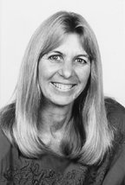
Debra Chamberlin-Taylor is a teacher at Spirit Rock Meditation Center. She has been meditating since 1973 and has led retreats that combine spiritual and psychological growth since 1978. In addition to practicing Vipassana, she has been influenced by Dzogchen, Diamond Heart, and devotional practices. More recently she has become a certified teacher of Wisdom Healing Qigong, finding Qigong and mindfulness used together to be the most healing and transformative practice in her long spiritual journey. A psychotherapist, she also leads workshops on embodiment of awareness and love in relationships and in our diverse world.
Devin (he/him) has been practicing Insight meditation since 1999. He regularly teaches at the Insight Meditation Society (IMS). Devin has undertaken many periods of silent long-term retreat practice. He was a community teacher at East Bay Meditation center in Oakland, CA where he co-founded both the teen and men of color sangha. Devin recently relocated to Western Massachusetts from the San Francisco Bay area. He is deeply committed to the personal and collective liberation of marginalized communities knowing that through the integration of reflection and insight, clarity and wisdom give rise to wise action.
devon hase has practiced intensively in the insight and vajrayana traditions since discovering meditation in 2000. After a decade of bringing mindfulness to high school and college classrooms, she entered several years of silent, solitary retreat in the mountains of Oregon. She now teaches at the Insight Meditation Society, Spirit Rock Meditation Center, and the Forest Refuge, and serves as co-guiding teacher of the online dharma community Refuge of Belonging. Devon supports practitioners in both long and short retreats, as well as through personal mentoring, with an emphasis on relational practice and connection to the natural world. Along with her life partner, nico, she co-authored How Not to Be a Hot Mess and the forthcoming This Messy, Gorgeous Love: A Buddhist Guide to Lasting Partnership (2026). Learn more at devonandnicohase.com.
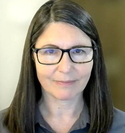
Diana Clark, PhD, offers Dharma teachings grounded in many years of meditation practice, retreat experience, and study, as well as a deep trust in the Buddha’s path of peace and freedom. Her teaching invites people to discover greater ease, clarity, and freedom in the midst of ordinary life. Diana was trained as a retreat teacher by Gil Fronsdal and Andrea Fella. Her background also includes serving as a professor of Theravāda Buddhism at the Institute of Buddhist Studies and working as a cancer researcher. She has a PhD in biochemistry. These varied forms of practice, teaching, and inquiry inform an approach to the Dharma that is careful, experiential, and engaged with everyday life. More than a thousand of Diana’s talks and guided meditations are available at AudioDharma.org. Her website is DianaClarkDharma.org.
My work since 2006 through UCLA’s Mindful Awareness Research Center (uclahealth.org/marc) emphasizes making mindfulness teachings accessible to all, regardless of background, yet without losing depth practice. In recent years I have been teaching on Natural Awareness— the effortless, objectless, and spacious side of awareness practices. Socially engaged Buddhism is a thread woven through many of my talks-- how can we end suffering both internally and externally? Having worked with teens and young adults for many years, some of the talks are geared to young people. Finally as a mom of a tween, I'm deeply inspired by the transformative power of daily life and family practice.
1. Choose one meditation practice and stick with it. If you want to progress in meditation stay with one technique.
2. Meditate every day. Practice now. Don't think you will do more later.
3. Any situation is workable. Each of us has enormous power. It can be used to help ourselves and help others.
4. Practice patience. Patience is one of the most important virtues for developing mindfulness and concentration.
5. Free your mind. Your mind is all stories.
6. Cool the fire of emotions. Anger is a fire.
7. Have fun along the way. I am quite happy. If you come to meditate you will also be happy.
8. Simplify. Live simply. A very simple life is good for every thing. Too much luxury is a hindrance to practice.
9. Cultivate the spirit of blessing. If you bless those around you this will inspire you to be attentive in every moment.
10. It's a circular journey. Meditation integrates the whole person
Donald Rothberg, PhD, has practiced Insight Meditation since 1976, and has also received training in Tibetan Dzogchen and Mahamudra practice and the Hakomi approach to body-based psychotherapy. Formerly on the faculties of the University of Kentucky, Kenyon College, and Saybrook Graduate School, he currently writes and teaches classes, groups and retreats on meditation, daily life practice, spirituality and psychology, and socially engaged Buddhism. An organizer, teacher, and former board member for the Buddhist Peace Fellowship, Donald has helped to guide three six-month to two-year training programs in socially engaged spirituality through Buddhist Peace Fellowship (the BASE Program), Saybrook (the Socially Engaged Spirituality Program), and Spirit Rock (the Path of Engagement Program). He is the author of
The Engaged Spiritual Life: A Buddhist Approach to Transforming Ourselves and the World
and the co-editor of Ken Wilber in
Dialogue: Conversations with Leading Transpersonal Thinkers.
Doug is founder and guiding teacher of Empty Sky Vipasssa Sangha and a long time practioner of vipassana and zen. His teaching is strongly influenced by Vimala Thakar and J. Krishnamurti as he explores such questions as "After all these years of practice, why are we not free?" and "What happens that we do not immediately live the understanding we work so hard to gain, continuing to cling to the false when seeing clearly what is true?" He brings a strong committment and interest to the integration of formal practice and intimacy in relationship in the context of daily living.